Carving Knifes $48.00
We are not accepting any new orders
We are moving our web-site, restructuring and catching up on previous orders.
Carving Knifes $48.00
We are not accepting any new orders
We are moving our web-site, restructuring and catching up on previous orders.
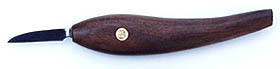
shown above-The handle on top is our Standard -5 1/2" length and is very comfortable for both push and pulling the knife. Our most popular choice
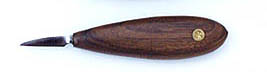
bottom is our Tear Drop 4"- length fits comfortably in the palm of your hand
Either choice is backed by our 100% Guarantee.
All our knives can be custom created in blade lengths 1"-1 3/4". We have listed the most common lengths below, but feel free to alter the blade lengths to fit your needs. We can also make longer blades for a small extra charge. Contact us for details.
We are not accepting any new orders
We are moving our web-site, restructuring and catching up on previous orders.

|
#1 General Our most common knife. A traditional all purpose blade used in all phases of carving. 11/4"-1 1/2" |

|
#2 General The curve of the blade is designed for slicing and concave cuts, also handy when you don't want the tip to bite in, such as tight curves. 1 1/2" |

|
#3 Detail The narrow tip allows you access to areas that you just can't reach with other knives. Slightly clipped for strength. 1" -1 1/4" |

|
#4 Detail Narrowest at the tip for detailing hollow work. The shape is also comfortable for thumb control. 1 1/2" - 1 3/4'" |

|
#4s Bird Carving A favorite among bird carvers. The tip does not get in the way for feathering and allows small hollows. 1" Only. |

|
#5 General A skew type blade works well for creating and cleaning stop cuts and for undercutting. 1 1/4" |

|
#6 General The knife has two edges. One is a straight edge, the other is on the tip and designed for undercutting. 1 1/2-1 3/4 
|

|
#7 Detail A different slant on the basic detail knife. Allows for more control in some areas. 1" - 1 1/4" |

|
#8 General Great for rounding corners. The tip allows access to spots unreachable with other blades and works well for stop cuts. 1 1/4" |

|
#9 General This knife has been enjoyed by many decoy carvers. It works well for slicing cuts and concave cuts. 1 3/4" |

|
#10 General A familiar shape for many. Found on jackknives. Great for hollow cuts and the tip allows for detail work. 1 1/2" - 1 3/4" |

|
#11 General An old time design used in places where you need a straight edge but do not want the tip to bite into your work. Also known as a "safe edge". 1 1/2" Knives Chisels Accessories Home 1-860-217-0554 or visit us on FaceBook for the latest updates
|